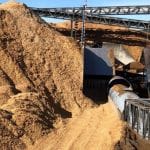
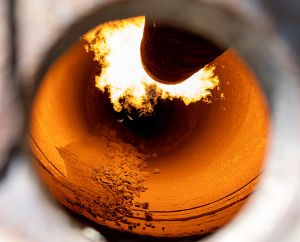
Lime kilns are important as they convert lime mud back into reburnt lime (calcium oxide) which allows pulp mills to regenerate spent cooking chemicals into active white liquor in the chemical recovery loop. However, the conversion process requires heat. Lime kilns are thus one of the largest consumers of fossil fuels in kraft pulp mill.
Lime kilns can face major operational challenges which include high energy use, low throughput that limits pulp production, and variability in reburnt lime quality. High energy use leads to increased fossil fuel demand and emissions, while low production rate leads to increased purchase lime usage, and high process variability leads to poor operation downstream. Strategies to alleviate these challenges typically require significant investment such as mechanical retrofits and fuel switching. One potential lower cost solution is oxygen enriched combustion, which can be done by increasing the fraction of oxygen in the combustion air.
The benefits of oxygen enriched combustion include reduced heat loss in the flue gas from lower nitrogen content and improved localized heat transfer to convert lime mud into reburnt lime from an increased adiabatic flame temperature. Oxygen enrichment in lime kilns has been developed since the mid-1900s but has not been adopted in the Canadian pulp and paper industry. Based on previously reported studies, an increase in oxygen from 21% to 26% can lead to a capacity increase of as much as 10% (a net benefit of $1-3M/yr) or a reduction in fossil fuel requirement of 13% (a net benefit of $0.5-1M/yr). The oxygen cost required to achieve these benefits can range between $1M-$1.5M/yr for continuous enrichment of oxygen up to 5%.
FPInnovations is working with a member mill to conduct a lime kiln oxygen enrichment trial to validate these benefits. The trial will also assess the extent of potential risks and challenges, which include overheating of refractories and over burning (sintering) of reburnt lime due to higher flame temperatures, as well as an increase in nitrogen oxides (NOx) formed in the flue gas. The study will provide strategies and operating conditions to best manage the risks associated with oxygen enriched combustion in Canadian lime kilns.
The first step of the trial is to establish the operational baseline at the mill, with a focus on the causticizing plant and the lime kiln. The baseline study consists of assessing key unit operational loadings, benchmarking performance using operational data and laboratory tests, and identifying process improvements to ensure a safe and successful trial. Equipment under review include liquor clarifiers, slakers, causticizers, pressure filters, precoat filters and lime kilns.
Baseline studies completed at FPInnovations’ member mills pointed to a need to reduce variability in various process streams, carefully consider the impact of oxygen enrichment on equipment loadings, and the need to have accurate laboratory tests to fully assess the effects of oxygen enrichment. FPInnovations will collaborate with member mills to implement these improvements while continuing to procure an oxygen injection skid to safely conduct the trial.
This project has been made possible [in part] by Natural Resources Canada’s Forest Innovation Program
For more information, please contact
Wei Ren, Senior Researcher
wei.ren@fpinnovations.ca