
In kraft pulp mills, black liquor is a byproduct of pulping consisting of spent inorganic chemicals and partially removed organics. Black liquor is processed in the recovery cycle to produce steam and energy, as well as to regenerate chemicals for pulping. This process is essential for the economic operation of a kraft pulp mill.
Increasing the black liquor dry solid content in the evaporation plant is the first step to maximize the efficiency of the recovery boiler. However, as black liquor is evaporated, the solubility limit of its various inorganics is reached, leading to their precipitation. The dry solid content of black liquor at the start of these events is known as the critical solids. The location and extent of these precipitation events often lead to fouling in the evaporator units, which reduces their capacity and efficiency. When fouling is severe, units need to be brought offline for cleaning, which further impacts mill operation.
Black liquor properties (e.g., ratio of organics to inorganics) and operating conditions in the evaporation plant (e.g., flowrate) can impact the critical solids. However, measurements in this process area are often limited, which makes critical solids prediction and fouling prevention difficult. These challenges hinder mill staffs’ ability to optimize the evaporation process.
Estimating critical solids can be done using correlations found in the literature. However, the concentrations of various inorganics in black liquor must be determined, which requires unique lab equipment and different procedures for each individual compound. Furthermore, the accuracy of this method is highly variable due to differences in evaporation plant setup and operation between mills and because the most common models do not account for important factors like the ratio of organics to inorganics.
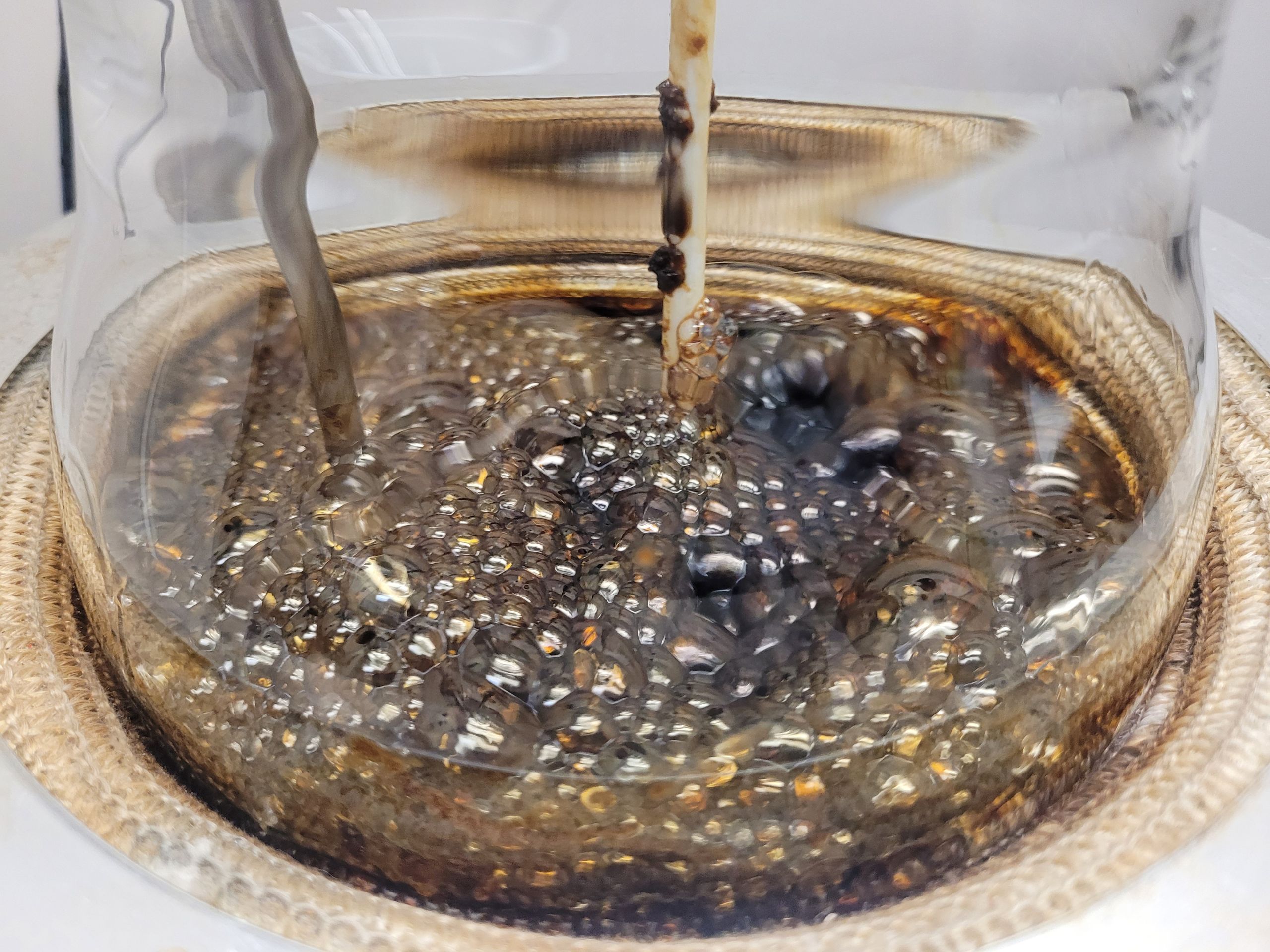
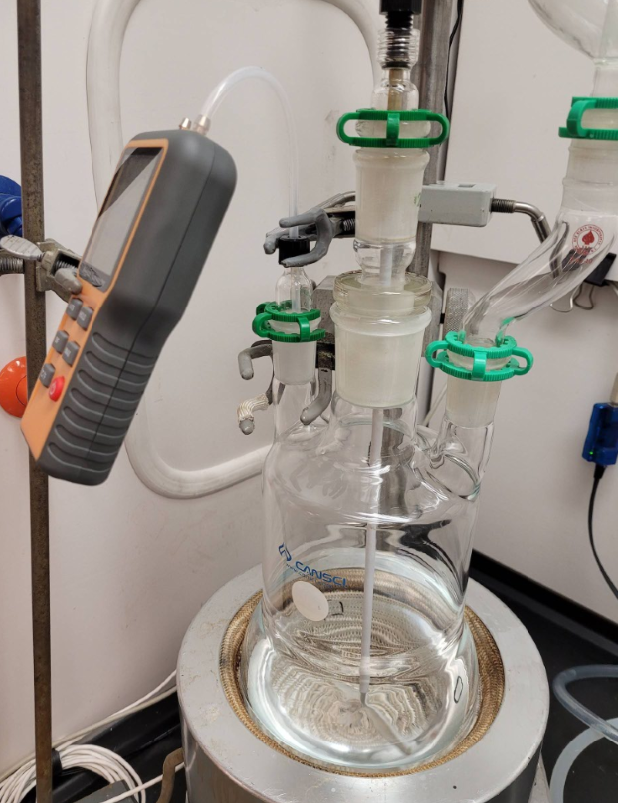
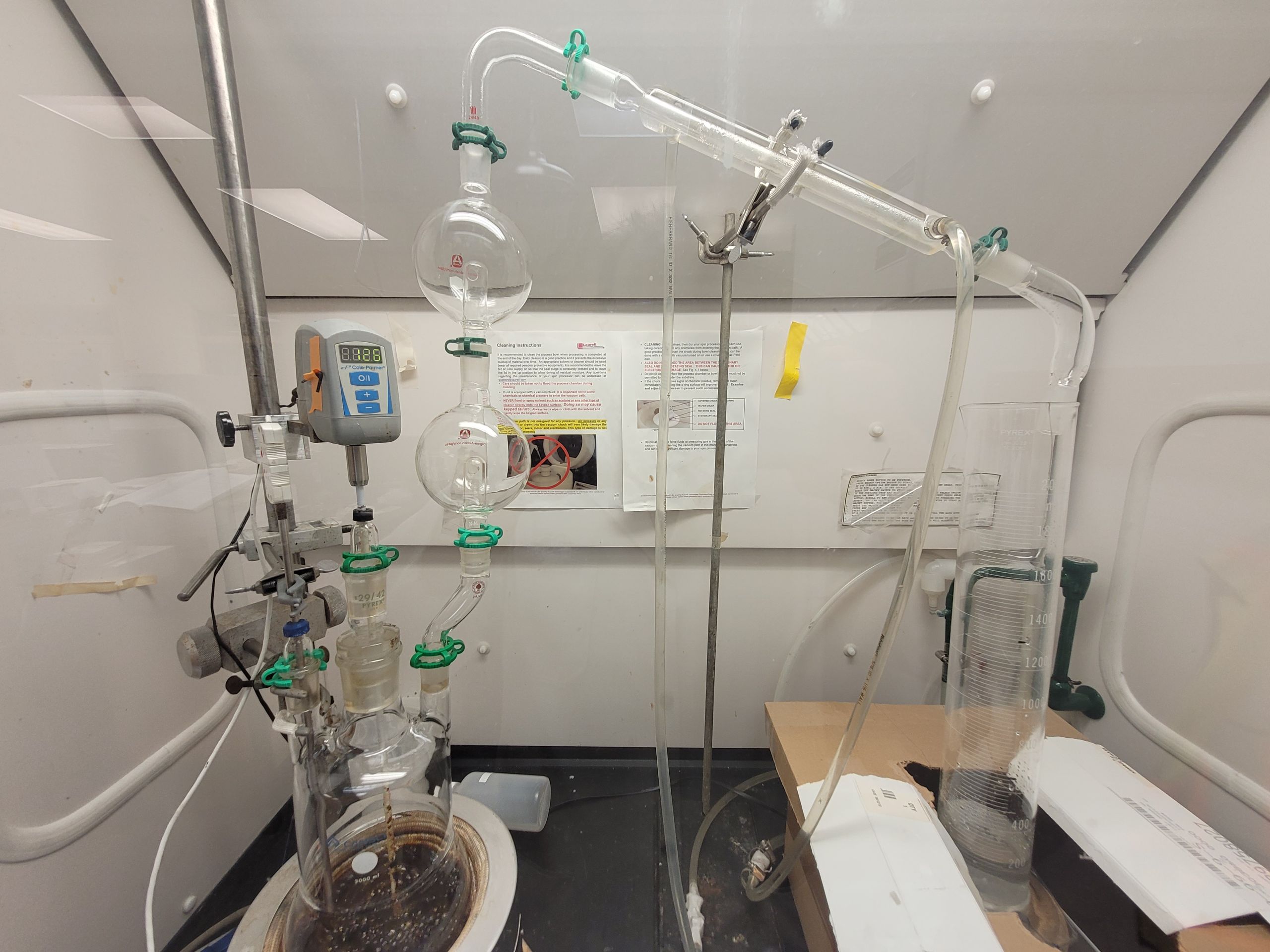
FPInnovations has developed a lab apparatus and approach that allows direct measurement of black liquor critical solids. This is done by collecting a black liquor sample at roughly 40% solid content (before the first precipitation event) and continuously boiling the sample under atmospheric pressure and at a constant heating rate. A condenser is used so the evaporated water can be collected and weighed, which is used to determine the solid content of the sample. During this process, the sample temperature will increase as the sample’s solid content increases. This is known as the boiling point rise (BPR). The rate of BPR increase is dependent on the inorganics in the black liquor. This means that when precipitation of inorganics occurs, the rate of BPR increase will change.
At the end of the experiment, the BPR of the sample is plotted as a function of the solid content, and the slope between the two is the rate of BPR increase. A change in the slope can be used as an indication of when a precipitation event occurs, which in turn indicates the sample’s critical solids. This approach developed by FPInnovations can achieve a margin of error of ± 0.70% (95% confidence) on the measured critical solids. The capability to measure black liquor critical solids consistently can give mill staffs an additional handle to continuously manage the evaporation process to maximize throughput while minimizing fouling, which has an estimated benefit of up to $0.5 / ton of pulp.
This project has been made possible [in part] by Natural Resources Canada’s Forest Innovation Program
For more information, please contact
Wei Ren, Senior Researcher
wei.ren@fpinnovations.ca