The primary benefit of oxygen delignification compared to kraft pulping is the more selective removal of 30-65wt% of the lignin still present in brownstock pulp. Partially-oxidized white liquor (P-OWL) is preferred over caustic as the alkali source in oxygen delignification in order to better control mill sodium/sulphur balance and white liquor inventories. Despite the many advantages of P-OWL vs. caustic, sulphide and partially oxidized sulphur species (i.e. thiosulphate and sulphite) in P-OWL compete with lignin for oxygen and alkali. Therefore, P-OWL as an alkali source can have the effect of slowing down the rate of delignification (leading to variability in post-O2 kappa number) compared to fully oxidized white liquor (F-OWL) where sulphur exists at the highest oxidation state (i.e., as sulphate ions which do not consume oxygen and alkali). Without the use of a catalyst, high temperatures (160°C) are required to produce fully-oxidized white liquor exposing conventional white liquor oxidizers to severe risk of stress corrosion cracking and explosion. This work identified a cost-effective catalyst which, at very low doses, can increase the degree of oxidation of sulphide to sulphate in white liquor at temperatures less than 120°C, which is the upper design temperature for many conventional P-OWL reactors.
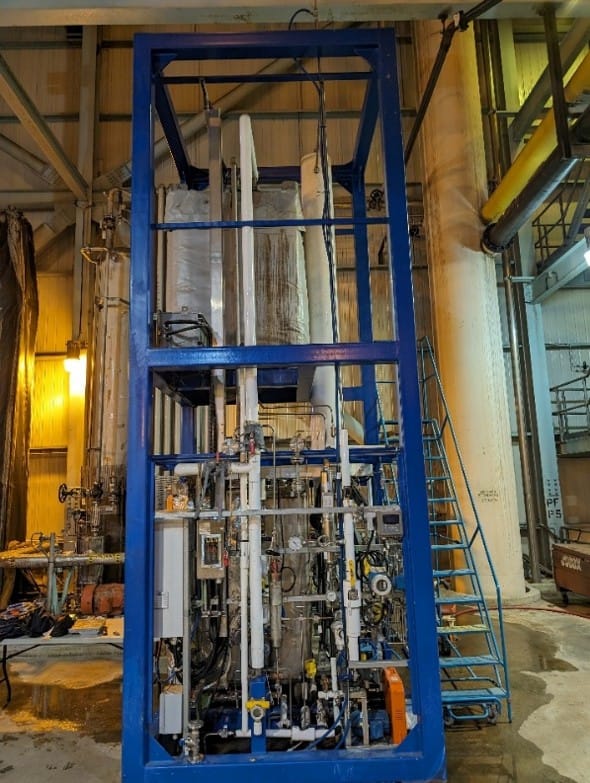
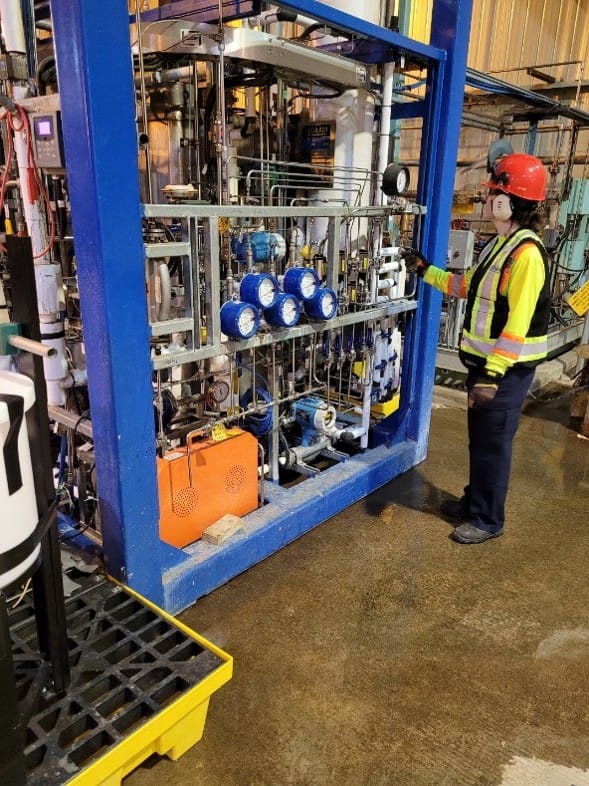
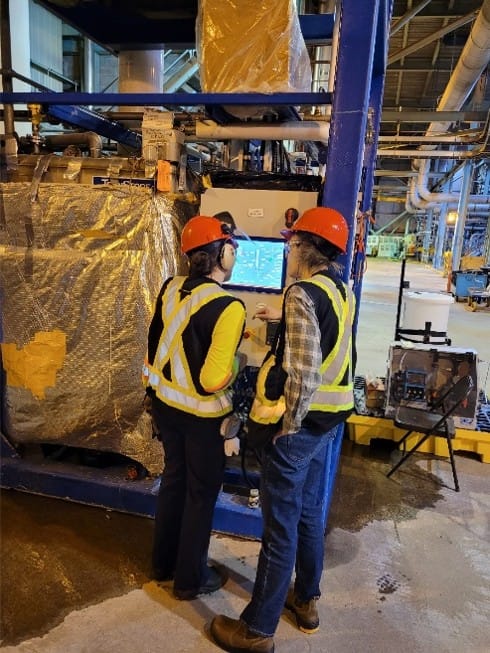
A pilot trial at an FPInnovations’ member mill site was completed in March of 2026. The pilot IsoFlo™ oxidizer by NORAM Engineering was used for the work. The reactor is of a jacketed pipeline design allowing for isothermal temperature control and multi-point oxygen addition. The pilot system is configured to allow for intermediate sample collection and was retrofitted for catalyst dosing into the suction side of the feed pump. The trial plan included baseline operation at the upper design limits for oxygen addition and temperature to isolate the catalyst effect on the degree of oxidation of sulphide in white liquor to sulphate. Four catalyst addition levels were evaluated at a fixed temperature and oxygen charge to observe the degree of oxidation, the partitioning of the catalyst between the pulp and the oxygen delignification filtrate and other downstream processes. In addition, the effect of the catalyst on oxygen-delignified pulp properties was completed at FPInnovations’ laboratories using mill brownstock.
The trial demonstrated a consistent increase in the degree of oxidation of sulphide to sulphate in white liquor from 38.5% under the baseline operating condition up to 91.0% at the highest dose of catalyst tested. The pulp properties for the catalyst and baseline conditions were identical at the catalyst doses evaluated in the trial. Preliminary results suggest that most of the catalyst adheres to the pulp thereby being carried over into the bleach plant. A longer trial is currently under consideration to monitor the trajectory of the catalyst through all mill operations.
The trial clearly demonstrated the potential of the catalyst to increase the degree of oxidation of sulphide to sulphate in white liquor thereby minimizing the variability in the oxygen and alkali addition levels and, by extension, the kappa number out of the oxygen delignification stage. Based on prior work, this approach will enable mills to reduce the pulp kappa number entering the bleach plant by 0.6 units which will save $0.6M/year in bleaching chemical costs for a typical Canadian mill with very low capital and operating expenses for this strategy. The payback for introducing a dosing system into an existing white liquor oxidizer is two to four months.
FPInnovations would like to thank NRCan and the members of FPInnovations for supporting this project.
For more information contact
Kurt Woytiuk, Senior Researcher
Kurt.Woytiuk@fpinnovations.ca